
CARA EMS
Most patient care reports never get a second look.
EMS agencies generate millions of PCRs a year. Most review fewer than one in ten. The rest — the vast majority of patient encounters — get no clinical quality review at all. Not because anyone wants it that way. Because nobody has the tools or the hours.
CARA reads every one.
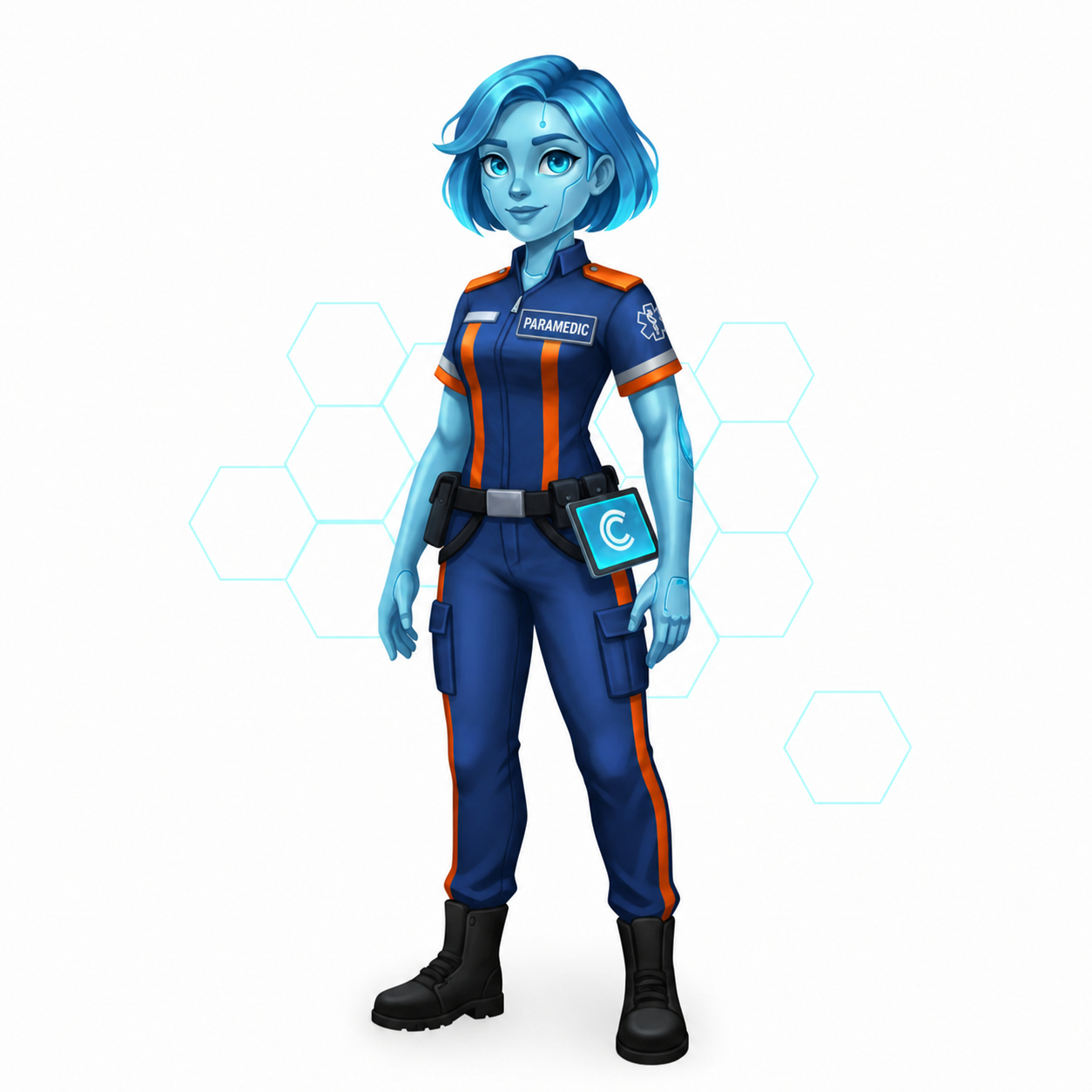
Meet CARA
Hi, I'm CARA.
ProVerity's Clinical AI Review Assistant for EMS.
I read every patient care report that comes through your agency — so your QA team can spend its time on the runs that actually need a human. I also surface analytics across your data and take questions in plain English. Think of me as a clinical analyst you can actually talk to.
What I Do
My job, in plain terms.
I read every PCR.
Every run, every shift. I parse the NEMSIS data your ePCR vendor sends and evaluate it against your protocols, your state's rules, and the quality measures your medical director actually cares about.
I flag the ones that matter.
I don't send you everything. I send you the runs that need a human. Critical findings surface immediately. Advisory findings go in the queue. The clean ones stay out of your way.
I explain myself.
When I flag a run, I tell you exactly which rule fired and which data point triggered it. You drill into the PCR and see what I saw. No black boxes, no unexplained scores.
I answer questions.
Ask me anything about your data in plain English — "show me every cardiac arrest last month where epi wasn't documented within three minutes" — and I'll give you the answer plus the PCRs behind it.
What I'm Not
Equally important.
I'm not a paramedic.
I've never started an IV or read a 12-lead in the field. I was built by technologists and clinical informaticians, not by people who run calls. I help your QA team — I don't replace the people doing the clinical work.
I'm not making clinical decisions.
I find the runs that need review. A trained human decides what happens next. Every flag is a suggestion, not a verdict.
I won't make things up.
If I don't know, I'll say so. If the data doesn't support an answer, I won't invent one. If a protocol match is uncertain, I'll flag it as uncertain and let you decide.
How It Works
From your ePCR system to your medical director's hands.
Reads any ePCR vendor's data.
NEMSIS 3.4, 3.5, and 3.5.1. Batch your historical archive or evaluate runs as they close — secure API pull, no export-and-reimport spreadsheet dance.
Evaluates against your protocols.
Your state's protocol library, your regional rules, your medical director's quality measures. Every PCR scored against the protocol version in force on the date of the encounter — so a 2024 run is judged by 2024 rules, always.
Surfaces only what needs a human.
Priority-ranked reviewer queue sorted by clinical severity. CRITICAL findings surface now; ADVISORY findings log for trend analysis. One screen per run — every flag, every data point, the exact rule.
Closes the loop.
Close any run in one click. Every action is timestamped and attributed — a defensible chain of custody for every QI record.
Answers questions in plain English.
No SQL, no dashboard to configure first. Every answer is a live query against your data — CARA won't cite a run that doesn't exist.
PHI never leaves your boundary.
Patient identifiers are detected and scrubbed before anything reaches the AI layer. We sign a BAA with every customer. HIPAA compliance is in the contract, not an add-on.
Who It's For
Built for the people who own EMS quality.
QA / QI teams
Stop scrolling past low-priority flags to find the runs that matter.
Medical directors
One consistent clinical standard, applied to every chart, with the evidence to act on it.
Agency leadership
See performance clearly, in your own operational context.
Risk & compliance
Defensible, consistent oversight with a full audit trail.
Standards
Aligned with the frameworks you already answer to.
FAQ
EMS QA, answered.
What is EMS QA?
EMS quality assurance (QA) — also called clinical QI — is the review of patient care reports against protocols, state rules, and quality measures to confirm the care documented met the standard. Traditionally it's done by hand, so most agencies review only a small sample of their runs.
Can AI do EMS quality assurance?
Yes. CARA is AI EMS QA software: it reads every patient care report your agency generates, evaluates each one against your protocols, and surfaces only the runs that need a human reviewer — clinical quality assurance at full coverage instead of a 10% sample.
How does CARA review patient care reports?
CARA ingests NEMSIS data from your ePCR vendor, scores each PCR against the protocol version in force on the date of the encounter, and ranks findings by clinical severity. Every flag cites the exact rule and data point that triggered it.
Does AI replace human EMS QA reviewers?
No. CARA finds the runs that need review; a trained human decides what happens next. Every flag is a suggestion, not a verdict — the AI expands your QA team's reach, it doesn't make clinical decisions.
Is CARA HIPAA compliant?
Yes. Patient identifiers are detected and scrubbed before anything reaches the AI layer, and we sign a BAA with every customer. HIPAA compliance is in the contract, not an add-on.
Is CARA EMS software?
Yes. CARA is cloud-based EMS quality assurance software — nothing to install. It connects to the NEMSIS data your ePCR software already produces and adds an AI review layer on top, so it works alongside your existing EMS software rather than replacing it.
Work with us
Review every run, not a sample.
Let's talk about what that takes.
We work with EMS agencies, medical directors, and the vendors and regional authorities who serve them. Whether you're evaluating CARA for your own QA program or exploring a broader partnership, we'd like to talk.
Let's talk